
Star Trek did not endure because it was flashy, disruptive, or constantly reinventing itself. It endured because it was patient. It trusted its characters, respected its audience, and believed—quietly but firmly—that humanity could be better than it is now.

From Star Trek: The Original Series through Star Trek: Enterprise, the franchise built its identity around character-led storytelling, moral curiosity, and a future that felt aspirational rather than cynical. These shows were not perfect. They contained misfires, filler, and ideas that did not always land. Yet decades later, they remain culturally alive in a way many technically superior modern productions do not.
That longevity is not accidental. It is structural.
Star Trek trusted its audience
Classic Star Trek did not explain itself obsessively. It presented dilemmas and allowed viewers to sit with them. Episodes often ended without clean answers, moral certainty, or emotional catharsis. That ambiguity was not a flaw—it was the point.
Whether it was Kirk navigating the limits of the Prime Directive, Picard wrestling with the ethics of command, or Sisko confronting the cost of compromise, the franchise consistently treated its audience as capable of engaging with complexity. It asked questions instead of delivering messages. Meaning emerged through discussion, disagreement, and consequence rather than through declaration.
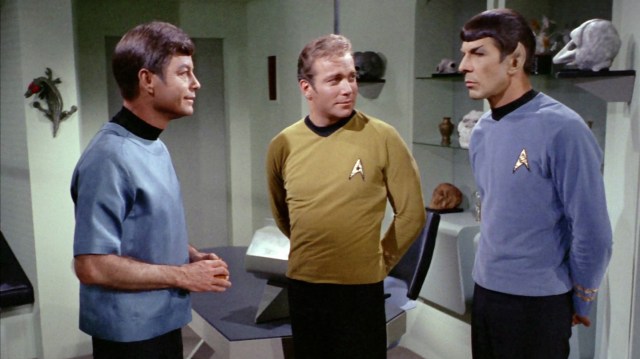 |
DeForest Kelley, William Shatner, and Leonard Nimoy as Doctory Leonard 'Bones' McCoy, Captain James T. Kirk, and Commander Spock in Star Trek (1966 - 1969) |
This trust created a participatory relationship with the viewer. Star Trek did not tell you what to think. It invited you to think alongside it.
Characters came before commentary
Across Star Trek: The Next Generation, Star Trek: Deep Space Nine, and Star Trek: Voyager, the franchise refined a crucial principle: characters were never written as symbols first.
Jean-Luc Picard was not “the philosopher captain.” He was a man shaped by restraint, trauma, and duty, who sometimes failed because he believed too deeply in order. Benjamin Sisko was not “the angry commander.” He was a grieving father, a reluctant messiah, and a leader who discovered that moral purity is harder to maintain when responsibility is unavoidable. Kathryn Janeway was not “the female captain.” She was a scientist forced into command, repeatedly choosing between principle and survival with no easy answers.
Inclusivity existed throughout classic Trek, but it was embedded rather than announced. Difference was treated as a fact of life, not a thesis statement. Characters were defined by how they responded to situations, not by what they represented.
This is why these characters feel real decades later. They were allowed to contradict themselves. They were allowed to be wrong. They were allowed to grow slowly, unevenly, and sometimes invisibly.
Time was the franchise’s greatest asset
One of the most misunderstood strengths of classic Star Trek was time.
With seasons that regularly ran 22 to 26 episodes, the franchise had space to breathe. Not every episode needed to advance a grand narrative. Not every hour needed to escalate stakes. Many episodes existed simply to place characters in situations that revealed who they were.
These so-called “filler” episodes are often where emotional attachment was built:
Conversations that lingered rather than rushed
Side characters stepping briefly into the spotlight
Relationships develop through routine rather than crisis
The cumulative effect of this structure cannot be overstated. When major events did occur—character deaths, betrayals, moral failures—they landed with weight because the audience had lived with these people. The Enterprise, Deep Space Nine, and Voyager felt like places, not just sets. The crews felt like communities, not ensembles assembled for plot efficiency.
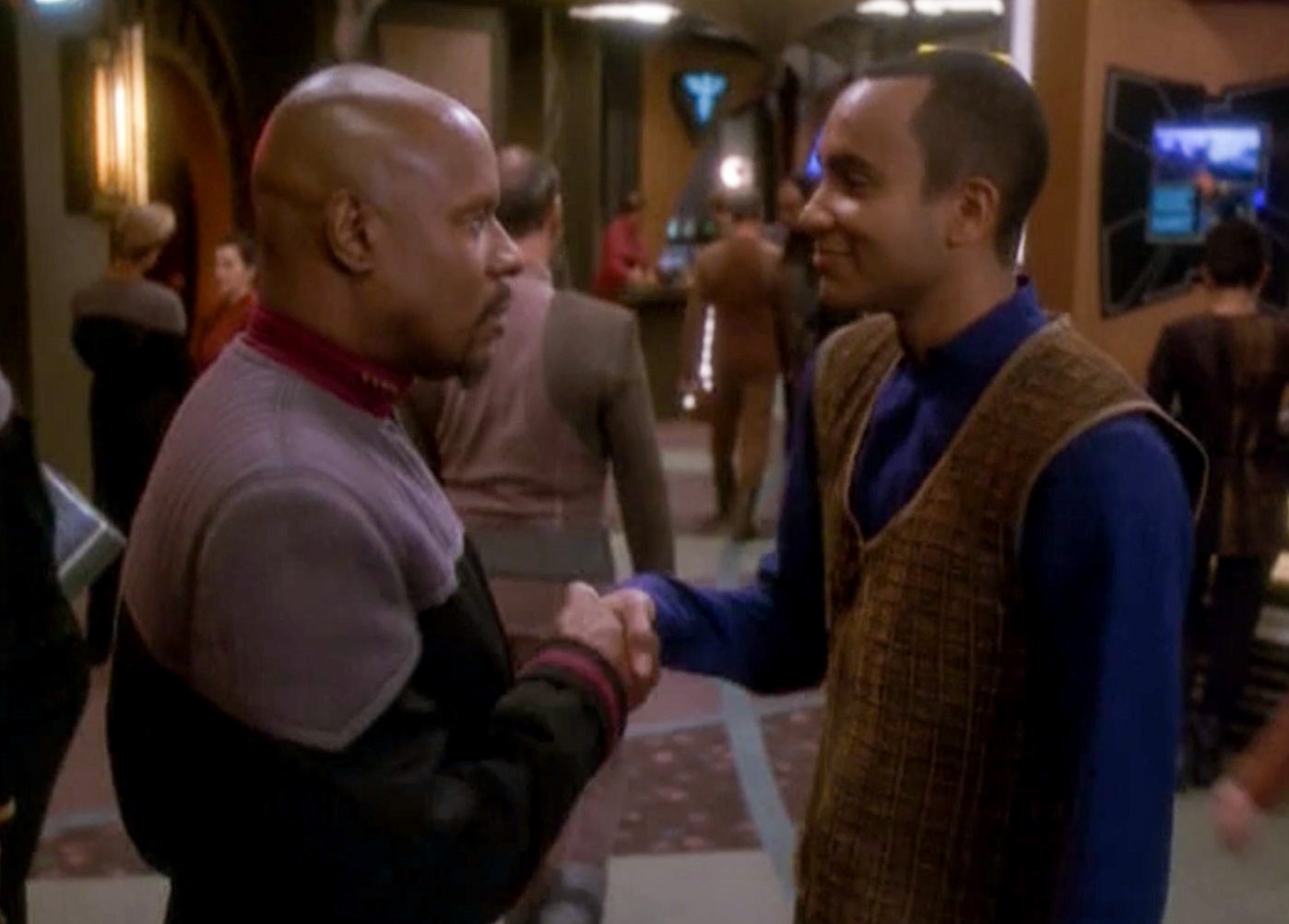 |
Avery Brooks and Cirroc Lofton as Captain Benjamin Sisko and his son Jake Sisko in Star Trek: Deep Space Nine |
Star Trek understood that attachment is not manufactured through intensity. It is earned through familiarity.
The future was aspirational, not naïve
Perhaps the most radical element of classic Star Trek was its optimism—not a shallow optimism that denied conflict, but a disciplined belief that humanity could improve itself.
The future depicted in these shows was not free of pain or disagreement. It was, however, a future in which institutions largely functioned, professionalism mattered, and leaders were expected to justify their authority through restraint rather than charisma. Conflict arose not because systems were broken by default, but because values sometimes collided.
This aspirational quality mattered deeply. Star Trek did not mirror contemporary cynicism back at its audience. It offered an alternative: a vision of what might be possible if humanity took responsibility for its better instincts.
That vision was never presented as inevitable. It was presented as something that had to be maintained through debate, sacrifice, and moral courage.
Why these shows still resonate
The reason classic Star Trek remains relevant is not that it commented on specific political moments. Those references have aged, sometimes awkwardly. What has not aged is its focus on human behaviour under pressure.
Fear, duty, loyalty, pride, grief, curiosity—these do not expire. By grounding its stories in character rather than topical urgency, Star Trek created narratives that remain emotionally accessible regardless of era.
This is also why these shows are endlessly rewatchable. Viewers do not return merely to relive plot twists. They return to spend time with people they know. To notice a reaction they missed. To see a familiar dilemma refracted through a different stage of their own lives.
That kind of relationship between audience and story is rare. It cannot be rushed, engineered, or reverse-designed through market analysis.
 |
| Katherine Mulgrew and Tim Russ as Captain Katherine Janeway and Lieutenant-Commander Tuvok in Star Trek: Voyager |
What Star Trek understood—and must remember
Classic Star Trek succeeded because it aligned its format, philosophy, and storytelling priorities. Long seasons supported character growth. Episodic structures encouraged reflection. Optimism was expressed through competence rather than spectacle.
Most importantly, the franchise trusted that if it invested in people - fully, patiently, and honestly - viewers would follow.
That trust is the foundation on which everything else was built.
In the next part of this series, we will examine what happened when Star Trek abandoned that foundation in favour of urgency, relevance, and spectacle—and why the cost has been higher than it appears.
No comments:
Post a Comment